Nothing About Us, Without Us: Rethinking Mental Health Data in Africa

By Benta Wambui - Counseling Psychologist, and Onyango Otieno - Mental Health Advocate, with contributions from Christine Ger Ochola - Communications Officer (APHRC) and Ann Waithaka - Senior Communications Officer (APHRC)
Millions of people across Africa experience anxiety, depression, and psychosis, yet much of the data and research addressing these challenges has historically excluded the perspectives of those with lived experience. In 2024, the African Population and Health Research Center (APHRC), in partnership with Wellcome, launched the Mental Health Data Prize Africa (MHDPA), an initiative that harnesses data science to improve understanding and responses to mental health across the continent.
Through this program, ten multidisciplinary teams each received up to £200,000 to develop data-driven solutions targeting anxiety, depression, and psychosis.
From the inception, MHDPA was guided by the belief that data is most effective when linked to human experience. While numbers reveal patterns, they cannot fully convey the impact of stigma, barriers to care, or the resilience of individuals facing mental health challenges in communities where open discussion remains difficult. To improve mental health outcomes in Africa, data-driven innovation must be developed with the people it serves.
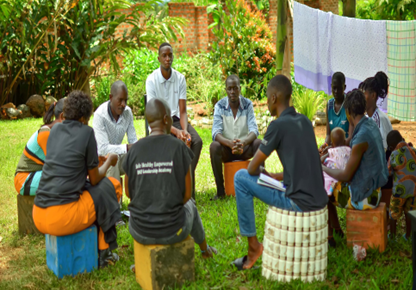
Central to MHDPA’s approach was involving people with lived experience at every stage, inviting their insights, listening to their reflections, and ensuring their perspectives shaped both priorities and solutions. This approach recognized lived experience as expertise and prioritized meaningful engagement over token consultation.
Throughout the initiative, people with lived experience worked closely with prize teams to shape research questions, challenge assumptions, inform ethical safeguards, and ensure the work remained grounded in real-world perspectives. They co-facilitated workshops, participated in dedicated upskilling sessions to strengthen their engagement in the research process, and provided ongoing feedback. This approach helped shift perspectives among research teams, participants and within the research process itself.
What We Learnt
Early in the process, it became clear that meaningful engagement requires structure, clarity, and time; it cannot rely on invitation alone. Some contributors asked, “What exactly is my role here?” This highlighted the need for clearer role definition as a shared responsibility between researchers and people with lived experience.
Creating space for open dialogue allowed contributors with lived experience to shape and define their roles, while research teams provided guidance, expectations, and practical tools to support engagement. Investing time early in co-developing role descriptions and processes helped reduce uncertainty and made participation more respectful, purposeful, and effective.
Participation carried emotional weight. Through conversations and workshops, we saw that sharing lived experiences, particularly those related to mental health, can be challenging. This led us to be more intentional about safeguarding alongside support by creating safe spaces, checking in regularly, and offering flexibility as needed.
As engagement increased, its impact on the work became clear. Contributors raised questions that changed the team's approach, including concerns about dataset exclusions, data interpretation, and the consequences of failed safeguards. These changes did more than enhance the work; they fundamentally reshaped it.
What Surprised Us
Initially, engagement was consultative. Contributors shared their perspectives and experiences when prompted, but decision-making remained with the research teams. This reflected a traditional structure where power was not fully shared.
As trust grew in a safe, inclusive environment, the dynamic shifted. Contributors began actively shaping discussions and influencing decisions, moving beyond simply providing input. This transition to partnership led to more meaningful involvement, with contributors’ insights integrated into the direction of the work.
Partnership involved shared ownership of ideas, greater transparency in decision-making, and a more balanced distribution of power. Contributors were encouraged to question, suggest, and co-create, while teams became more intentional about listening and adapting. This shift required ongoing reflection on power dynamics to ensure engagement was genuinely collaborative rather than tokenistic.
The diversity of contributors’ experiences became clear through conversations that highlighted differences in age, gender, location, language, and access to care. What mattered to one person often differed from what mattered to another. Importantly, learning was mutual: contributors gained insight into data science and research, while teams better understood the real-world context behind the data. This created a shared, respectful space for collective learning.
What We Would Do Differently
Looking back, one thing is clear: we should have started engaging people sooner. Some of the best ideas came up late in the process, highlighting the value of involving people with lived experience voices from the very beginning. We also noticed that some teams were better prepared for participatory approaches than others. This sometimes led to uncertainty about how to participate meaningfully. If we had spent more time learning together at the start, teams might have been more consistent.
It is also important to consider what happens after a project ends. Throughout the initiative, we saw that the relationships formed between teams and contributors were not only sources of insight but also of trust, motivation, and accountability. If these connections end abruptly, momentum and collaboration may be lost. Planning for ongoing engagement from the outset helps maintain trust, sustain impact, and ensure contributors feel valued.
A New Standard for Mental Health Research
This experience reinforced something simple but important: data-driven innovation is strongest when it is grounded in the realities of the people it is meant to serve. While the initiative addressed anxiety, depression, and psychosis, it also highlighted that early partnership with individuals with lived experiences is as important as research outcomes.
Meaningful engagement is an ongoing process that requires humility, curiosity, and a commitment to learning. Although tools and approaches may change, the guiding principle remains: nothing about us, without us. We encourage you to apply these lessons to future research, funding, and mental health initiatives across Africa.